Bone Char and Biochar
Biochar and Bone Char sound similar don't they but they're actually quite different in terms of how we use them and why.
Many of us are familiar with biochar, a gorgeous black shiny crumb which is woody material, usually waste wood, that has been burnt very hot in a low oxygen retort (a process called pyrolysis).
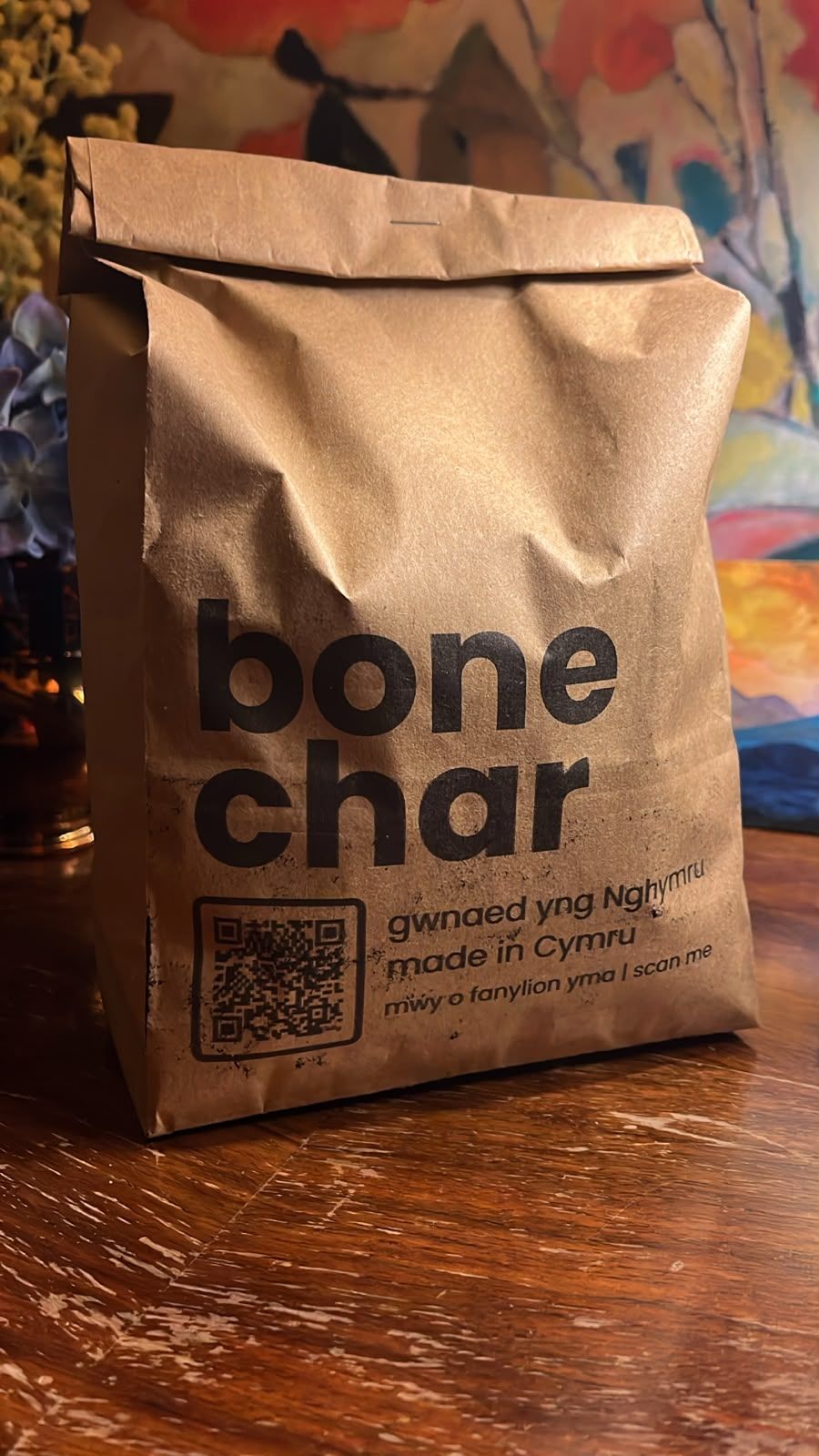
Bone Char as you've probably guessed is very similar except it's bones we're burning not wood. We accumulate a lot of bones from the food waste we compost and we teamed up with lovely Ned and Mel from local Blackbird Charcoal to turn them in to nutritious bone char.
So what is the difference between these two?
Biochar
Made from: Woody plant biomass (timber waste, large branches, twigs)
Key Benefit: Microbial Habitat & Moisture
Highly porous carbon structure that acts like a sponge, retaining water and hosting millions of beneficial microbes.
HOW DO YOU USE IT?
Adding raw biochar directly to garden beds can temporarily shock the soil by hoovering up existing nutrients and moisture. Co-composting solves this issue entirely. We add Biochar in to our compost right at the start when the food waste and wood shavings go in to our hot composter, it makes everything so much happier, there's less flies, less smells. You can do it too. By adding a scoop of biochar into your home hot compost pile early on, you can get the same benefits because several critical processes happen simultaneously:
- Inoculation ("Charging"): The sterile chars absorb the rich liquids, nitrogen, and active microbial life of the breaking down organic matter. They leave the pile fully "charged" and the resulting compost is then ready to feed plants immediately.
- Gas & Odour Reduction: Biochar acts as a physical filter during the composting process. A global meta-analysis shows it reduces smelly ammonia emissions by ~36% and methane emissions by ~54%, trapping valuable nitrogen inside the finished compost. But crucially for home composters less smells means your compost is less interesting to rats!
- Permanent Soil Building: While normal compost continues to break down over a few years, the tough carbon structure in biochar is highly stable and will stay locked in the soil for centuries, creating permanent fertility zones.
Bone Char
Animal bones (sounds gruesome to some, in our case we get bones from the food waste we manage from pubs and restaurants in Machynlleth). We let the composting process pick them clean first then they're ready for pyrolysis.
Key Benefit: Slow-Release Phosphorus & Calcium
Calcined bone shards contain 10–12% phosphorus and 20–25% calcium. Pyrolysis makes them brittle and easy to smash down.
HOW DO YOU USE IT?
1. Soil Amendment
Bone char is rich in calcium, phosphorus, and trace minerals, making it an effective soil conditioner. Its high porosity provides a great habitat for beneficial soil microbes.
- Compost and Worm Farms: Mix finely crushed bone char into your compost pile or worm farm to boost mineral content and feed microorganisms.
- Compost Teas: Add bone char powder into aerated compost tea brews to help enrich the liquid with phosphorus and minerals.
- Direct Soil Application: Blend bone char directly with mulch or mix it straight into the root zone of garden beds when planting.
2. Water Treatment and Filtration
Because of its unique adsorption properties, bone char is widely used to purify liquids.
- Fluoride and Heavy Metal Removal: It is commonly packed into water filtration systems to adsorb and reduce fluoride, lead, and other heavy metal ions.
3. Pigment and Art
- Bone Black / Ivory Black: Finely ground bone char produces a deep, rich black pigment historically and currently used in artist paints, inks, and carbon-based black colorants
Get 1kg bags by emailing us at helo@criwcompostio.co.uk